My Experience With EFT Tapping
The first time I experienced EFT was during a Reiki healing session. I was feeling anxious and emotionally overwhelmed, and as we began tapping, my body softened almost immediately. My breath slowed, the tension in my chest eased, and I felt a huge sense of release in my body.
That experience stayed with me. Over time, EFT became a core part of my personal healing and professional work. I am a Certified EFT Facilitator through the International Neuroenergetics Association, and I regularly integrate EFT into my sessions to support nervous system regulation, emotional release, and subconscious healing especially for anxiety and self-doubt.
What Is EFT Tapping?
EFT (Emotional Freedom Techniques) is a mind-body practice that combines gentle tapping on specific acupressure points with focused awareness and intentional language.
By tapping on these points while acknowledging what you’re feeling, EFT helps calm the nervous system and reduce the emotional charge around stressful thoughts, memories, and patterns.
Ancient Roots, Modern Healing
EFT is rooted in Traditional Chinese Medicine, which maps the body’s energy meridians or pathways used in acupuncture and acupressure for thousands of years. EFT blends these ancient principles with modern psychology and nervous system science, making it accessible, effective, and easy to use.
When Should You Use EFT?
EFT can be used anytime your nervous system feels activated or overwhelmed. It’s especially supportive for:
Anxiety and chronic stress
Emotional triggers or overwhelm
Self-doubt and fear of failure
Resistance to growth or change
Feeling emotionally “stuck”
Fear of visibility or being seen
EFT can be used in the moment or as a regular self-regulation practice.
How to Do EFT Tapping (Step-by-Step)
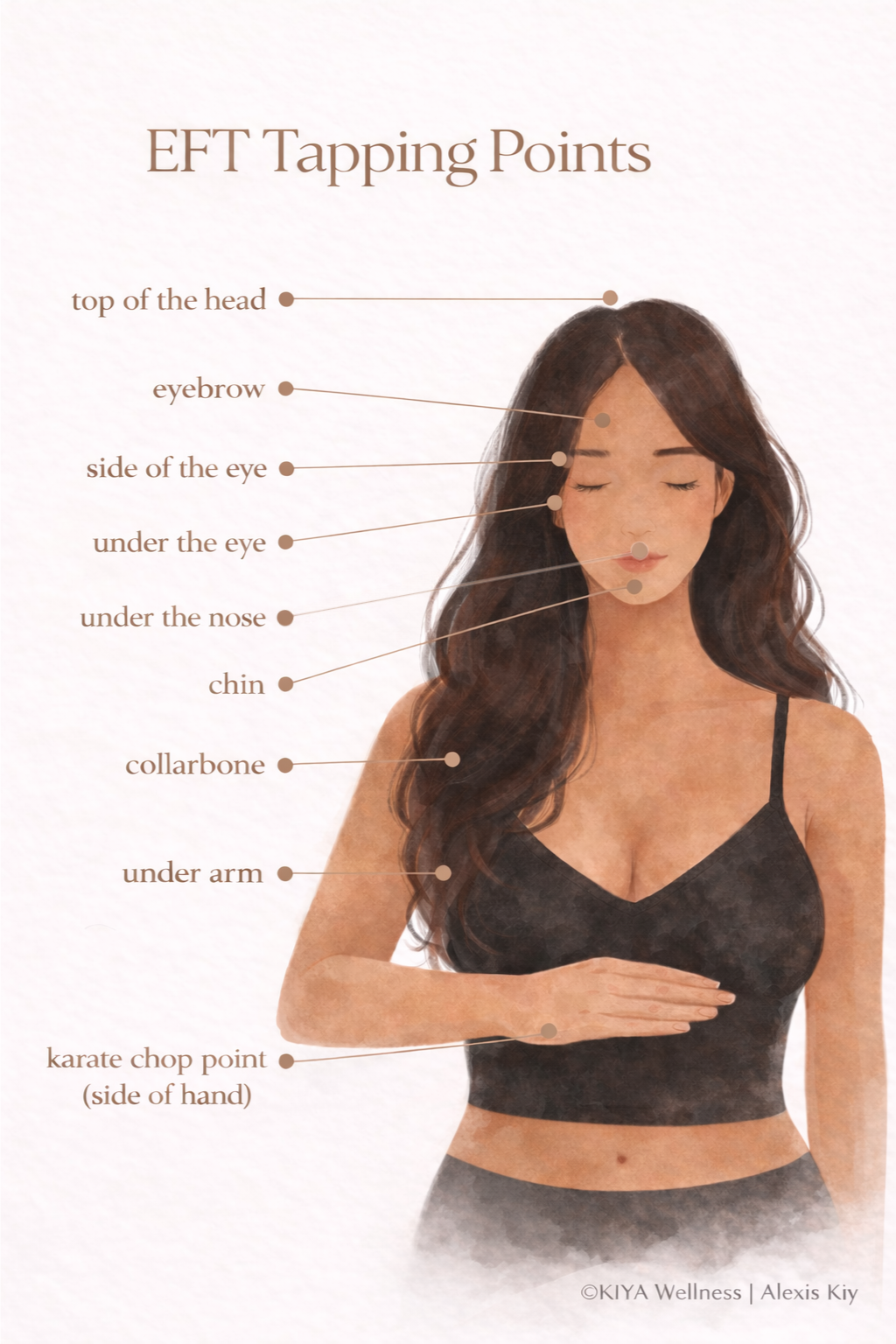
Step 1: Find the Tapping Points
Common EFT points include:
Side of the hand (karate chop)
Top of the eyebrow (inner part where the brow starts)
Side of the eye
Under the eye
Under the nose / above the lip
Chin
Collarbone
Under the arm
Top of the head
Precision isn’t required, gentle tapping is enough.
Step 2: Focus on the Problem
Bring awareness to what you’re experiencing right now.
Ask yourself:
What am I feeling?
Where do I feel it in my body?
How intense is it (0–10)?
Naming the experience helps the nervous system feel acknowledged rather than suppressed.
Step 3: The Setup Statement
While tapping on the side of the hand, say:
“Even though I feel anxious right now, I deeply love and accept myself.”
Repeat this three times.
This acknowledges the emotion while reinforcing safety and self-acceptance.
Step 4: Tap Through the Points
As you tap each point, briefly name what’s present:
“This anxiety”
“This tightness in my chest”
“This fear of moving forward”
Move through the points slowly.
Recommended rounds:
Start with 2–4 rounds, then pause and reassess intensity.
Step 5: Introduce Supportive Statements
Once intensity begins to decrease, gently shift into integrating language:
“I’m open to feeling calmer.”
“My body can relax now.”
“I am safe in this moment.”
“I don’t need to have it all figured out.”
This helps anchor a new nervous system response without bypassing.
Step 6: Breathe and Relax
Finish with a deep inhale through the nose and a slow exhale through the mouth. Notice any shifts in your body or emotional state. You can stop here or repeat another round if needed.
Where Can I Learn More About EFT Tapping?
I love The Tapping Solution on YouTube.
I also offer guided, personalized sessions tailored to your unique nervous system and healing goals. If you’re ready to feel more regulated, supported, and grounded, I invite you to book a discovery call.
Book a discovery call to explore working together.